
Key Takeaways
Choosing childrens books works best when you consider a child’s development, interests, feelings, and everyday life—not only the age printed on a cover.
- Match the book’s language and structure to the child’s current reading stage.
- Look for stories that build vocabulary, comprehension, empathy, and curiosity.
- Include characters and families that reflect both familiar and unfamiliar experiences.
- Use formats such as picture books, graphic novels, audiobooks, and early readers thoughtfully.
- Let a child’s interests guide the collection, while revisiting choices as they grow.
Match childrens books to reading development
The best book for a child is usually one that feels inviting without being either too easy or too demanding. Reading development is gradual, and children often move back and forth between stages depending on their energy, confidence, and the kind of story they want. A toddler may enjoy a book through rhythm and repetition, while an older child may need a strong character or mystery to stay with a longer text. Age ranges can help, but they should be treated as starting points rather than strict rules.
Books for babies and toddlers
For babies and toddlers, choose books that invite participation. Sturdy board pages, clear pictures, repeated phrases, rhymes, and simple patterns give young children ways to anticipate what comes next. A book does not need a complicated plot to be worthwhile; naming an animal, turning a page, or joining in with a familiar sound is already part of early literacy.
Keep the reading relaxed. Some children will sit through the whole book, while others will carry it away, return to one picture, or ask for the same two pages repeatedly. Those small, repeated encounters help children connect spoken words with images, gestures, and the pleasure of being close to a caregiver.
Early picture books for preschoolers
Preschoolers are ready for stories with clearer problems, memorable characters, and room for questions. Look for language that is rich but understandable, along with illustrations that add information rather than merely repeating the text. A four-year-old may be especially drawn to pretend play, “but how?” questions, friendship, fairness, and stories that make room for big feelings without making them frightening.
A useful age-and-interest guide can help caregivers move beyond a broad age label and think about the child, the story, and the moment. A lively book may suit a rainy afternoon, while a gentle, predictable story may be better after a difficult day. The right fit often becomes visible when a child points to details, joins a refrain, or asks for the story again.
Transitional books for beginning readers
Beginning readers need books that make successful reading possible while still offering a reason to keep going. Repetition, manageable sentences, familiar vocabulary, generous spacing, and supportive illustrations can reduce the strain of decoding. Choose books that allow a child to solve some words independently, then enjoy the story without turning every page into a test.
It is also fine to read books aloud that are above a child’s independent level. Listening to a more complex story grows vocabulary and narrative understanding while the child’s own reading skills catch up. A short solo book and a richer shared book can happily sit beside each other in the same evening.
Chapter books for independent readers
When children begin reading chapter books independently, the change is more than a jump in page count. They are learning to remember characters across chapters, follow several events, infer motives, and hold a story in mind between reading sessions. Series can be helpful because familiar characters lower the effort needed to enter a new book, but a single compelling novel can be just as valuable.
Pay attention to stamina and confidence. A child who reads slowly may still be deeply engaged, and a child who finishes quickly may need stories with greater emotional or structural depth. Offer choices, protect time for read-alouds, and let independent reading include humor, rereading, nonfiction, and illustrated books.
Choose stories that build essential skills
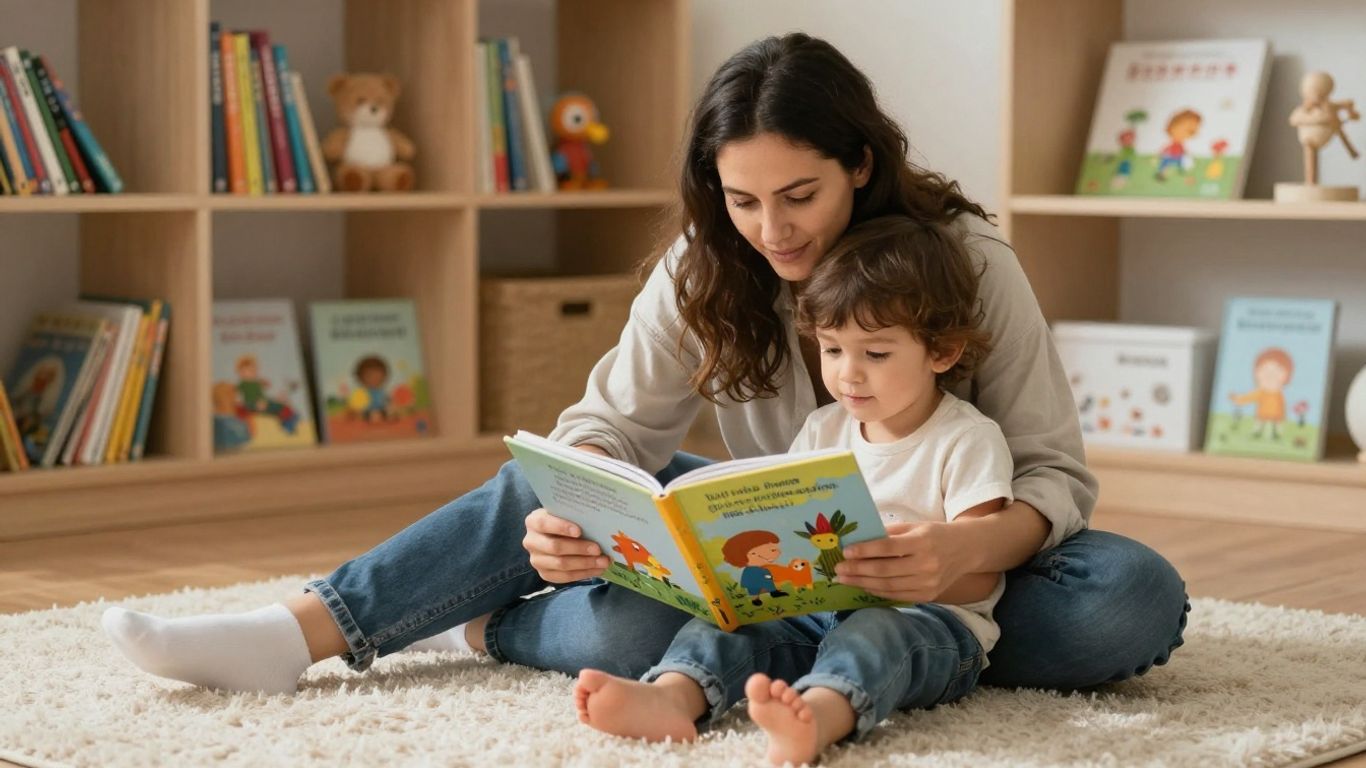
Stories can support many kinds of growth at once, especially when adults leave space for children to notice, wonder, and respond. The strongest childrens books do not announce every message; they give children characters, choices, and consequences to think about. Read-alouds are particularly useful because a caregiver can explain a word, pause at a turning point, or connect a character’s experience to something familiar. The goal is not to turn storytime into a lesson, but to let conversation grow naturally from the story.
Vocabulary and language development
Children learn language through hearing words used in meaningful situations. A story about a nervous first day, an unfamiliar animal, or a complicated friendship can introduce new vocabulary with enough context for the meaning to become clear. Rather than stopping for every unfamiliar word, choose a few that matter to the story and revisit them naturally.
Ask open questions that invite more than a one-word answer. “What do you think this character will try?” or “Which part felt surprising?” encourages children to describe, predict, and explain. Over time, these conversations help build expressive language as well as listening comprehension.
Phonics, fluency, and comprehension
For children learning to read, select books that support the specific skill they are practicing without making the experience feel mechanical. Rhymes and repeated refrains strengthen attention to sounds, while clear print and predictable sentence patterns can support fluency. Illustrations should provide context, but children should also have opportunities to look closely at the words.
After reading, talk about what happened and why. Asking a child to retell the beginning, middle, and end can reveal comprehension more gently than a quiz. For ideas about combining appealing art with accessible text, explore this guide to picture books for kindergarten, then adapt the suggestions to the child in front of you.
Critical thinking and problem-solving
A good story gives children something to work out. Perhaps a character must repair a friendship, find a new route home, or decide whether to tell the truth. These situations encourage readers to weigh possibilities, notice clues, and consider how one choice affects someone else.
Pause before the resolution and invite a prediction. Children may suggest answers adults would never consider, and that is part of the pleasure. Afterward, compare the prediction with the ending and ask whether another solution might also have worked. This keeps the discussion curious rather than evaluative.
Emotional awareness and social skills
Stories can give children a safe way to examine feelings that are difficult to name in their own lives. A character may feel left out, disappointed, proud, worried, or unsure how to set a boundary. When children see those experiences handled with care, they can begin to recognize emotional signals and imagine possible responses.
Zumblies creates illustrated downloadable ebooks for children ages 4–8, with stories centered on social-emotional themes such as emotions, friendship, confidence, curiosity, boundaries, and handling failure. They are designed to be read together and discussed, allowing the meaning to emerge through recognizable situations rather than a lecture. A quiet question after the final page is often enough: “Have you ever felt a little like that?”
Find books that reflect children’s lives
Children deserve to find parts of their own lives in books, but they also benefit from meeting characters whose experiences differ from theirs. A varied shelf can widen empathy without asking any one book to stand in for an entire culture, family type, or disability experience. Look for specific, well-developed characters rather than symbolic representation in the background. The story should give people ordinary joys, conflicts, humor, and agency.
Representation and cultural diversity
When choosing culturally diverse childrens books, consider who gets to be at the center of the story. A child can enjoy a book about a holiday or historical event, but representation also belongs in everyday plots about school, pets, friendship, and imagination. Authors’ perspectives, settings, language, illustrations, and details of daily life all contribute to whether a story feels grounded.
Avoid treating one title as a complete introduction to a culture. Instead, build a small group of books with different voices and kinds of stories. Trusted review collections that consider literary quality, authentic settings, age suitability, and portrayals free from stereotypes can be a useful starting place; this reviewed book recommendations resource offers that kind of editorial lens.
Family structures and lived experiences
Families may include one parent, two parents, grandparents, foster carers, adoptive parents, stepparents, siblings, or close adults who share caregiving. Books do not need to explain every family structure in order to include it. A child can simply see a familiar home, meal, bedtime routine, or school pickup presented as part of ordinary life.
It is equally valuable to read stories about experiences a child does not share. Keep the conversation open and concrete, asking what seems similar, what seems different, and what the characters need from one another. The aim is connection, not comparison or a demand that children speak for their own families.
Disability and neurodiversity
Look for disabled and neurodivergent characters who have personalities, preferences, relationships, and goals beyond the challenge named in the plot. A story can include support needs without making the character’s difference a problem to be fixed. Illustrations and language should feel respectful, specific, and free of pity.
Caregivers can also notice whether the book leaves room for different ways of communicating, moving, sensing, or participating. A child may connect with a character’s directness, careful observation, focused interest, or need for quiet even when the circumstances are not identical.
Balancing familiar and unfamiliar perspectives
A well-rounded shelf offers both a mirror and a window. Familiar stories can reassure children and help them feel seen, while unfamiliar perspectives can prompt thoughtful questions about how other people live and feel. Neither category needs to be heavy or solemn; funny, adventurous, domestic, and imaginative stories can all broaden a child’s view.
Watch how a child responds. If every unfamiliar story becomes an explanation of hardship, add books where difference is simply part of a joyful, ordinary life. If the shelf contains only familiar experiences, gently introduce stories with new settings, traditions, and points of view.
Select books by format and reading level
Format changes the way a child enters a story. A picture book may invite close observation, a graphic novel may make sequence and expression visible, and an audiobook may free a child to follow language beyond their decoding level. Reading level is useful for independent practice, but it should not decide every shared reading choice. Choice protects reading joy when children can move among formats without feeling judged.
Picture books and illustrated stories
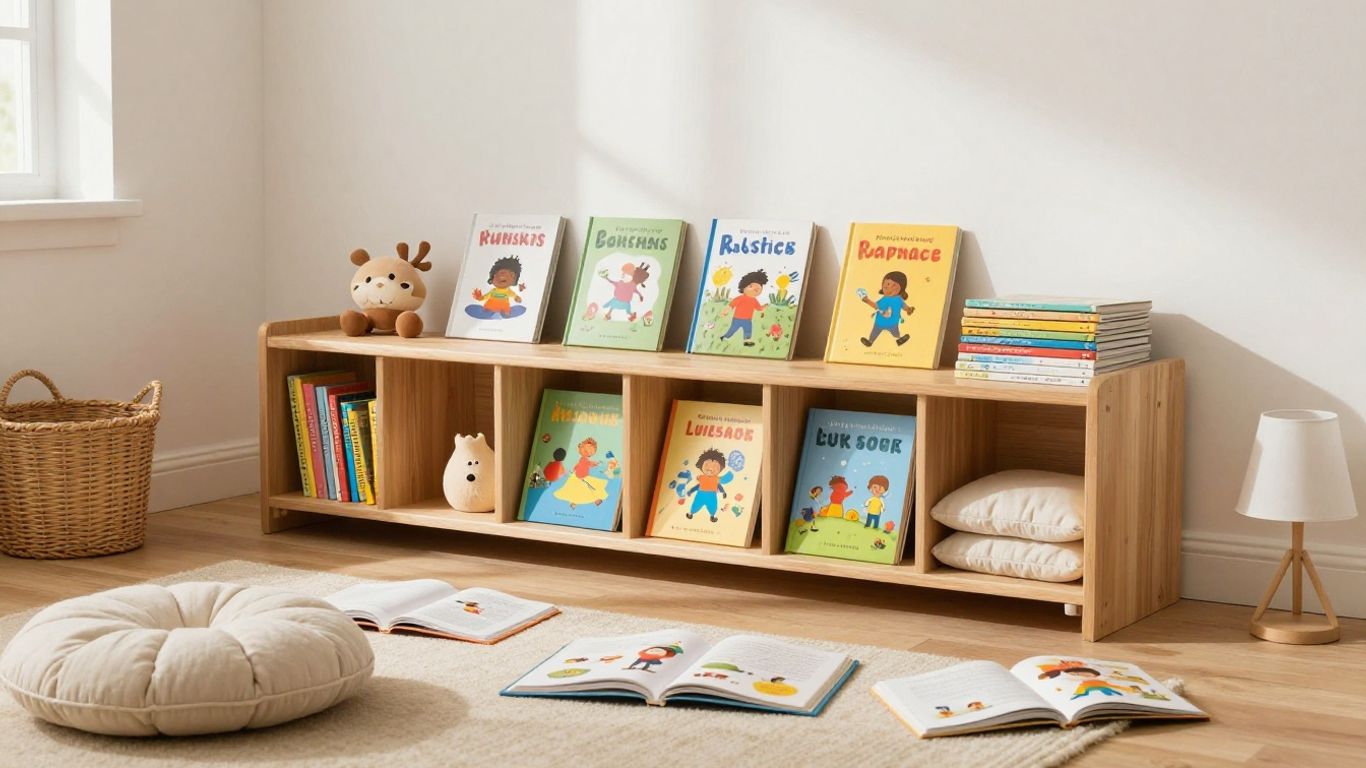
Picture books are not only for children who cannot yet read. Their art can carry mood, reveal a character’s private thoughts, and add details that invite prediction. Older children may enjoy layered picture books with sophisticated humor or emotional complexity, while younger readers may prefer a clear sequence and a satisfying repeated pattern.
When browsing, look at the relationship between words and images. Do the illustrations offer clues? Is there enough visual detail to revisit? Can the book work as a quick daytime read and also reward a slower conversation at bedtime? These questions often matter more than whether a book is labeled for a particular grade.
Graphic novels and visual storytelling
Graphic novels teach readers to follow panels, facial expressions, motion, dialogue, and changes in perspective. They can be a welcoming bridge for children who find dense pages tiring, but they still require close reading. The images are not a shortcut around comprehension; they are part of the narrative language.
Choose graphic stories with clear sequencing and themes suited to the child’s maturity. Reading side by side can be especially helpful at first. Ask what the child noticed in a panel before discussing the words, then compare how the art and text work together.
Early readers and leveled books
Early readers are most useful when the text matches a child’s current decoding practice and the story remains worth understanding. A very controlled vocabulary can become dull if the plot has no energy, while a lively story with too many difficult words may exhaust a new reader. Look for clear typography, repetition with variation, and illustrations that support—not replace—the words.
Reading levels also differ across publishers, so treat a level as a guide rather than a universal measurement. If a child can read every word but cannot explain what happened, the book may be too easy in one sense and not useful in another. If they understand the story but need help with many words, it may be better for shared reading.
Audiobooks and digital reading formats
Audiobooks can give children access to expressive language, longer plots, and fluent models of reading. They are especially helpful when a child wants a story that is beyond their independent decoding level. Listening works best when it remains an active experience: children can pause, predict, ask questions, or follow along with a print copy.
Zumblies creates illustrated downloadable ebooks for ages 4–8 that are designed for shared reading and discussion. A downloadable format can fit a family’s reading routine, while the caregiver’s presence keeps the experience social and screen-light. Digital reading is one option among many, not a replacement for every kind of book or conversation.
Use interests to encourage reluctant readers
Reluctance often has a reason. A child may be tired from decoding, unsure how to choose, worried about making mistakes, or simply waiting for a story that feels personally meaningful. Start with what already catches their attention, even if it seems narrow. Interest is not a distraction from literacy; it can be the path that makes sustained reading possible.
Animals, science, and nature
Animals, machines, weather, space, insects, and the natural world can draw children into both fiction and nonfiction. Pair a fact-filled book with a story about a character who cares for an animal or explores a habitat. This gives the child more than one way to return to the subject and gradually introduces different text structures.
For a child fixated on one topic, variety can grow from the interest rather than against it. A dinosaur fan might move from picture books to field guides, fictional adventures, biographies of scientists, or stories about museums. The bridge should feel inviting, not like a test of whether the child is ready to move on.
Fantasy, adventure, and mystery
Fantasy and adventure offer movement, wonder, and a clear reason to turn the page. Mystery adds another pleasure: noticing clues and forming a theory before the characters do. These genres can support comprehension because children are motivated to remember details, track motives, and check whether their predictions hold.
Choose emotional intensity carefully. Some children enjoy danger that stays clearly imaginary, while others prefer quests with a calm landing. Talk about the difference between suspense and fear, and let a child stop or switch books without framing that choice as failure.
Sports, hobbies, and everyday life
A child who avoids reading may be eager to read about soccer drills, cooking, crafts, dance, building projects, or a favorite game. Instructional books count, as do magazines, joke collections, catalogs, and biographies. Once a child experiences success with a subject they care about, they may be more willing to try a story outside that interest.
Notice the details that make the interest personal. One child may love competition; another may care about teamwork, collecting, movement, or mastering a skill. Matching the emotional center of the book to the child can be as useful as matching its topic.
Humor and short-form stories
Humor lowers the pressure around reading. A silly character, surprising image, comic strip, or short chapter can give a hesitant reader a quick sense of completion. Collections of brief stories are particularly useful when attention is limited or a child wants to choose how much to read.
Keep the tone light without dismissing the child’s effort. A funny book can still have strong language, memorable characters, and a satisfying structure. If a child laughs and then tells someone else the joke, they are practicing comprehension, sequencing, and expressive language in a very natural way.
Evaluate quality, safety, and age suitability
A book can be beautifully made and still be the wrong choice for a particular child at a particular moment. Before buying or borrowing, consider the child’s sensitivities, recent experiences, and ability to recover from tense scenes. Quality also includes the writing, illustrations, characterization, accuracy, and care with which the book treats its subject. A thoughtful selection process does not remove surprise; it helps make surprise manageable.
Checking themes and emotional intensity
Read a description carefully, then look for a fuller review when a book includes loss, separation, illness, bullying, danger, or frightening imagery. Ask whether the story offers enough emotional support and whether the ending provides some sense of safety or meaning. A child who has just moved homes may need a different choice than they would have made six months earlier.
You do not have to avoid difficult subjects altogether. Shared reading lets a caregiver pause, name what is happening, and reassure the child that questions are welcome. Previewing a book is an act of care, not a way of flattening every story into something predictable.
Assessing language and content
Consider the words, humor, conflict, and behavior shown on the page. Is the language appropriate for the family’s expectations? Are harmful actions challenged by the story, or presented as the only way to solve a problem? Does the book distinguish between a character making a mistake and a character being treated as permanently bad?
Illustrations deserve the same attention as text. A scene that sounds mild in a summary may feel intense because of color, facial expression, scale, or visual detail. When possible, browse several pages before deciding.
Understanding reading levels and maturity
Reading ability and emotional maturity do not develop in lockstep. A strong decoder may still be unsettled by a theme, while a child who reads independently with effort may understand a sophisticated story when it is read aloud. Keep those two questions separate: Can the child read it alone? And is the child ready to experience it?
Use the table below as a quick way to think about fit, then adjust it for the individual child and the purpose of the reading.
| Reading purpose | Helpful features | Adult support |
|---|---|---|
| Shared enjoyment | Rich language, expressive art, memorable characters | Read aloud and pause for reactions |
| Early solo practice | Short sentences, repetition, clear print | Offer help without taking over |
| Building stamina | Manageable chapters, strong plot, recurring characters | Set a comfortable routine |
| Exploring a difficult theme | Emotional context, thoughtful resolution, trusted perspective | Preview and discuss together |
The table is a guide, not a ranking system. A book may serve several purposes at once, and children should have room to choose something simply because it looks funny or beautiful.
Reviewing recommendations from trusted sources
Recommendations are most useful when they explain why a book fits. Look for reviews that discuss literary quality, content, age suitability, representation, and the relationship between words and images. Librarians, teachers, booksellers, and caregivers who know the child can add context that a star rating cannot.
Still, the child’s response is valuable evidence. Watch for lingering over illustrations, spontaneous participation, plot questions, or an immediate request to read it again. Those signals may tell you more about a future favorite than a generic “best of” list.
Build a well-rounded childrens books collection
A home collection does not need to be large to be nourishing. It needs enough variety that a child can find comfort, challenge, laughter, information, and companionship in its pages. Include books for independent reading as well as books that ask an adult to slow down and share the experience. Over time, the shelf should change with the child, not become a museum of an earlier stage.
Mixing classic and contemporary titles
Classic books can offer memorable language, familiar cultural touchstones, and a chance for adults to share stories they once loved. Contemporary books can bring newer perspectives, forms of family life, settings, and ways of seeing the world. Read both with curiosity, and do not assume that age alone makes a book valuable.
Preview older titles for stereotypes, outdated language, or assumptions that may need context. A classic can remain part of the collection while sitting alongside books that broaden whose experiences are centered.
Creating a balance of fiction and nonfiction
Fiction builds imagination, narrative understanding, and emotional insight; nonfiction answers questions and helps children investigate the world. A child may need both in the same week—or even the same reading session. Pairing them can be natural: a story about a garden beside a book about seeds, or a fictional animal adventure beside a field guide.
Let nonfiction include more than encyclopedias. Recipes, maps, instructions, interviews, biographies, diagrams, and photo essays all teach children that reading serves many purposes. Interest-led nonfiction is often a gentle entry point for a child who does not yet identify as a reader.
Choosing books for shared reading
Shared reading is not limited to bedtime, and it does not require a child to sit perfectly still. Two siblings can take turns, a caregiver can read while a child draws, and a family can return to one favorite chapter over several nights. The relationship around the book matters as much as finishing it.
Zumblies creates illustrated stories for children ages 4–8 around social-emotional themes, with the intention that adults and children read together and talk afterward. That approach fits moments when a family wants to explore friendship, confidence, boundaries, or big feelings through a character’s experience rather than a direct lecture. For families with mixed ages, a shared family reading guide offers ideas for choosing stories that can hold more than one attention span.
Refreshing the collection as children grow
Every few months, notice which books are still being reached for and which no longer fit. Keep beloved favorites even when they seem young; rereading is not a step backward. At the same time, add books that are a little richer in language, structure, or emotional range so the shelf offers a gentle next step.
Rotate books rather than removing everything at once. A small basket of current choices, a few familiar comfort reads, and occasional library discoveries can make the collection feel fresh without turning reading into another purchase or performance. The best childrens books are the ones children return to with genuine interest.
Conclusion
Choosing childrens books is less about finding one perfect title than about building a responsive reading life: notice what a child can manage, what they wonder about, what they feel, and what they are ready to discover next. With a mix of formats, perspectives, interests, and shared conversations, a modest shelf can become a steady place for comfort, curiosity, and connection.
Frequently Asked Questions
How do I choose childrens books for a child’s age?
Start with the child’s reading ability, attention span, interests, and emotional readiness rather than relying on age alone. Age ranges are useful for browsing, but the child’s response will help you decide whether a book is a comfortable fit.
How many books should a child have at home?
There is no ideal number. A smaller collection with variety, familiar favorites, and a few books that offer a gentle challenge can serve a child well, especially when it changes as their interests and skills develop.
Should children read books above their reading level?
Yes, when an adult reads with them or provides support. Books above an independent level can expand vocabulary and imagination through listening, while easier books give children opportunities to practice decoding and build confidence alone.
What makes a book good for a reluctant reader?
Look for a strong match with the child’s interests, a manageable length, appealing illustrations, humor, or a clear sense of progress. Letting children choose among several appropriate options can reduce pressure and increase ownership.
Are graphic novels suitable for young readers?
Graphic novels can be excellent choices when the themes and complexity suit the child. Reading panels, expressions, dialogue, and visual sequence requires real comprehension, and many children find this format an inviting way to read more often.
How can books help children talk about feelings?
A character’s experience gives children some distance from their own emotions. After reading, ask what the character noticed, needed, or might try next, while accepting that a child may prefer to listen rather than share a personal story.
How often should I update a child’s book collection?
There is no fixed schedule, but checking the collection every few months works well. Keep books a child loves, add a few new challenges, and rotate in library books so there is always something familiar and something fresh.